Honouring the Births of the Twin Manifestations of God
As the Twin Holy Birthdays of the Báb and Bahá’u’lláh draw near, Bahá’ís across the world prepare to celebrate momentous milestones in the spiritual history of humanity — the Birth of the Herald and the Birth of the One He Heralded — The Promised One of All Ages.
In this most glorious Dispensation, these two Luminaries were born just one day apart in the Islamic calendar (Bahá’u’lláh two years before the Báb) — the Báb on the first day of Muharram 1235 A.H. (20 October 1819) in Shíráz, and Bahá’u’lláh on the second day of Muharram 1233 A.H. (12 November 1817) in Tihrán. These sacred events, known together as the Twin Holy Birthdays, are celebrated as one continuous festival of joy and gratitude.
‘My Grandfather’s house’
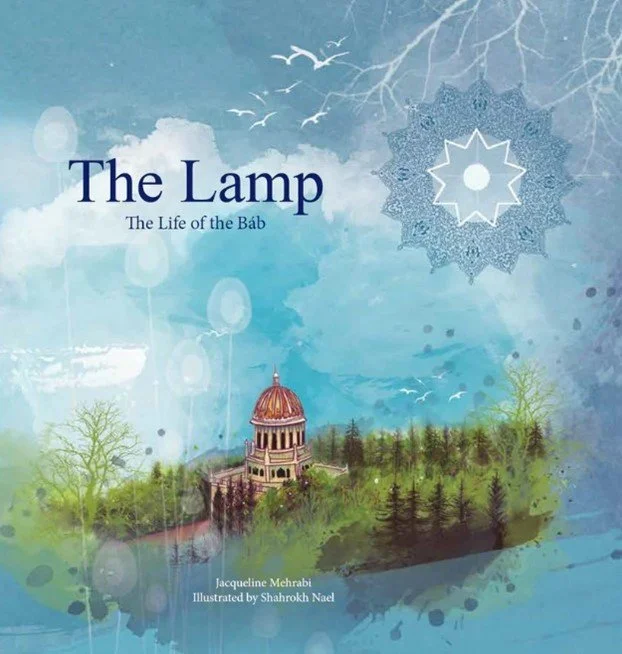
The following excerpt is taken from Chapter 2 of ‘The Lamp; The life story of the Báb’ - a beautifully illustrated book about the life of the Báb, for children.
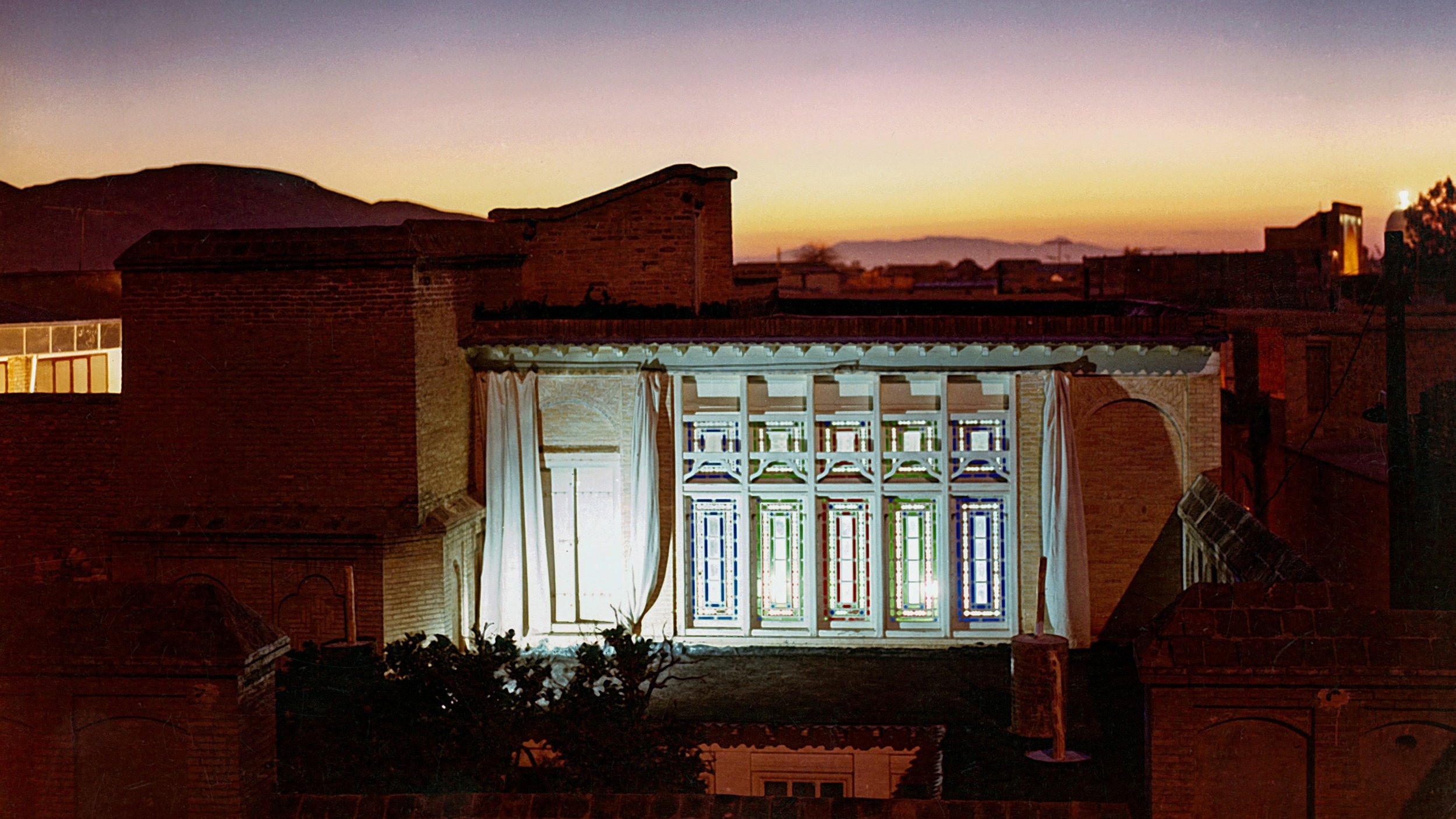
The Báb was born in Shiraz on 20 October 1819 in the house owned by His uncle Siyyid ‘Ali. Several members of the extended family lived there, and this is where the Báb spent the first few years of His childhood.
He then moved with His family to the house next door, which had a small courtyard with a pool in the centre and a well of fresh, sweet water in the corner. Later, an orange tree was planted there. The garden was surrounded by high walls and was very peaceful.
The Báb’s father was a cloth-merchant and he worked hard to provide for his wife and child. But, sadly, he died when the Báb was very young.
Hi uncle Siyyid ‘Ali had always helped to look after the family, and now he took both the Báb and the Báb’s mother under his complete care and protection. The Báb’s mother was his sister and he had always had a special affection for his small nephew. Siyyid ‘Ali did not have any children of his own, which saddened him greatly. His only child, a little boy called Javád, had died when he was a baby.
The Báb did not have any brothers or sisters, but when He was young He played with His cousins who lived next door, including a little girl called Khadijih Bagum. As He grew older He still sometimes joined in their games, but He began to spend more of His time praying and thinking about God.
When the Báb was nine, His uncle took Him on an outing to visit a holy shrine high up in the mountains. They set off just after dawn with some of His uncle’s friends, and by the time they arrived late in the afternoon everyone was exhausted. After having something to eat and saying their evening prayers they all went to bed early.
Around midnight the Báb’s uncle woke up and looked across to where his nephew should have been sleeping. The bed was empty. Siyyid ‘Ali searched the area around the camp but could not find the Báb anywhere. Fear gripped his heart and he thought the Báb must have fallen off the mountain.
Just as he was giving up all hope he heard the voice of a child chanting prayers lower down the mountain, and by the light of the moon he saw the small figure of the Báb, standing alone on the deserted mountainside, pouring out His heart in praise of God.
***
The Báb often spent a great deal of His time praying and it often made Him late for school. He would apologise to His teacher and explain:
‘I was in my Grandfather’s House’.
His teacher knew what he meant. By ‘Grandfather’ the Báb did not mean the father of one of His parents; He meant the Prophet Muhammad Who had lived twelve hundred years before and was His Great-Grandfather many times over. By ‘my Grandfather’s House’ He meant the mosque where He often went to pray.
And He always forgot what time it was when He was praying.
Bahá’u’lláh’s innate knowledge
The following excerpt is taken from www.bahaistories.com. It is a piece shared by Druzelle Cederquist, called ‘The Story of Bahá’u’lláh’.
Husayn-‘Ali was the third-born child of the honorable Mirza ‘Abbas Buzurg, a vizier (minister of state) of the Shah, and his noble wife Khadijih Khánum. Only later, when the time was right, would He take the title "Bahá’u’lláh," meaning in Arabic "the Glory of God."
Early on, His parents recognized that Husayn-'Ali was an unusual child. His mother often wondered how a baby could be so happy and content all the time. "This child never cries!" she would exclaim.
But what truly astonished them as they watched their young son grow was His extraordinary knowledge and wisdom. His simple education was no different from that given to other sons of the Persian nobility. Tutors came to His home to teach reading, writing, and Persian culture, just as they did for the other boys. Husayn-‘Ali learned to read the great Persian poets - 'Attar, Hafez, Rumi - as the other boys did, and to recite from the Koran, the holy book of Islam. He did not study science, for science was viewed with suspicion in nineteenth-century Persia, nor did He study philosophy or religion. Those were left to the mullas and mujtahids -- Muslim scholars who spent long years studying the teachings, laws, and traditions of Islam.
Yet Husayn-'Ali showed a lively interest in spiritual topics, and from His boyhood He displayed a profound understanding of spiritual truth. His understanding was innate and reached far beyond the knowledge of His teachers. Although Husayn-‘Ali was never arrogant or boastful about the knowledge that came so easily to Him, neither was it something He could hide.
As Husayn-‘Ali grew into a youth, His father could find Him, from time to time, deep in conversation with the most learned of men. They welcomed Him into their company despite His young age. His understanding of the Prophets and Their teachings, of the nature of God and the human spirit, added much to their discussions. By the time He was fourteen years old, Husayn-‘Ali’s innate knowledge and wisdom were recognized by all who knew Him.
"Such intelligence! And such perception! He is as a flame of fire," Mirza Buzurg said. "Even at this young age He surpasses mature men."
He wondered how his young son could know these things. Did His gift have something to do with the noble ancestors of their family lineage? Through His father, Husayn-‘Ali was a descendant of the great Persian kings of old as far back as Yazdigird the Sassanian. He was also a descendant of two holy Prophets: the Persian Prophet Zoroaster, Who taught His followers about the battle between good and evil; and Abraham, Who taught the Jews to worship one God.
Days of Remembrance - available at Bahá’í Bookshop
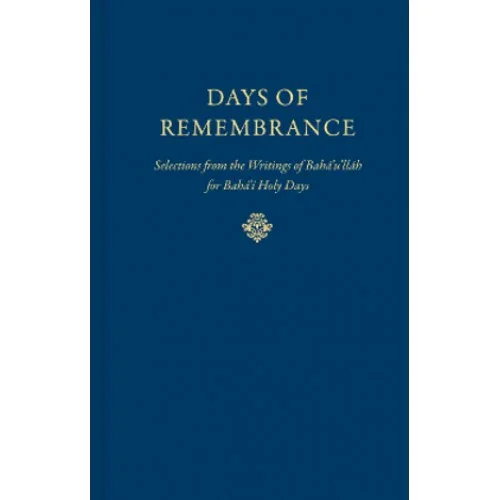
Days of Remembrance offers forty-five selections from the Writings of Bahá'u'lláh, most of which have not been previously translated or published in English, revealed specifically for, or relating to, the nine holy days annually commemorated by the Bahá’í community. It was published in anticipation of the celebration of the two hundred-year anniversaries of the Birth of Bahá'u'lláh and the Birth of the Báb in 2017 and 2019 respectively, for which Bahá’í communities across the planet had been preparing.
The observance of holy days is an important feature of every religion, and the bicentenary commemorations, the first of which occurred in October 2017, brought together communities through gatherings open to all, in villages, towns, and cities around the world.
Vineyard of the Lord
The button below will take you to a short film (16 minutes), Vineyard of the Lord. It offers an insight into the lives and mission of the Twin Manifestations—the Báb and Bahá’u’lláh, and how the Bahá’í World Centre developed around the sacred sites of their shrines.