Reflections from the annual gathering for Bahá'í Councils
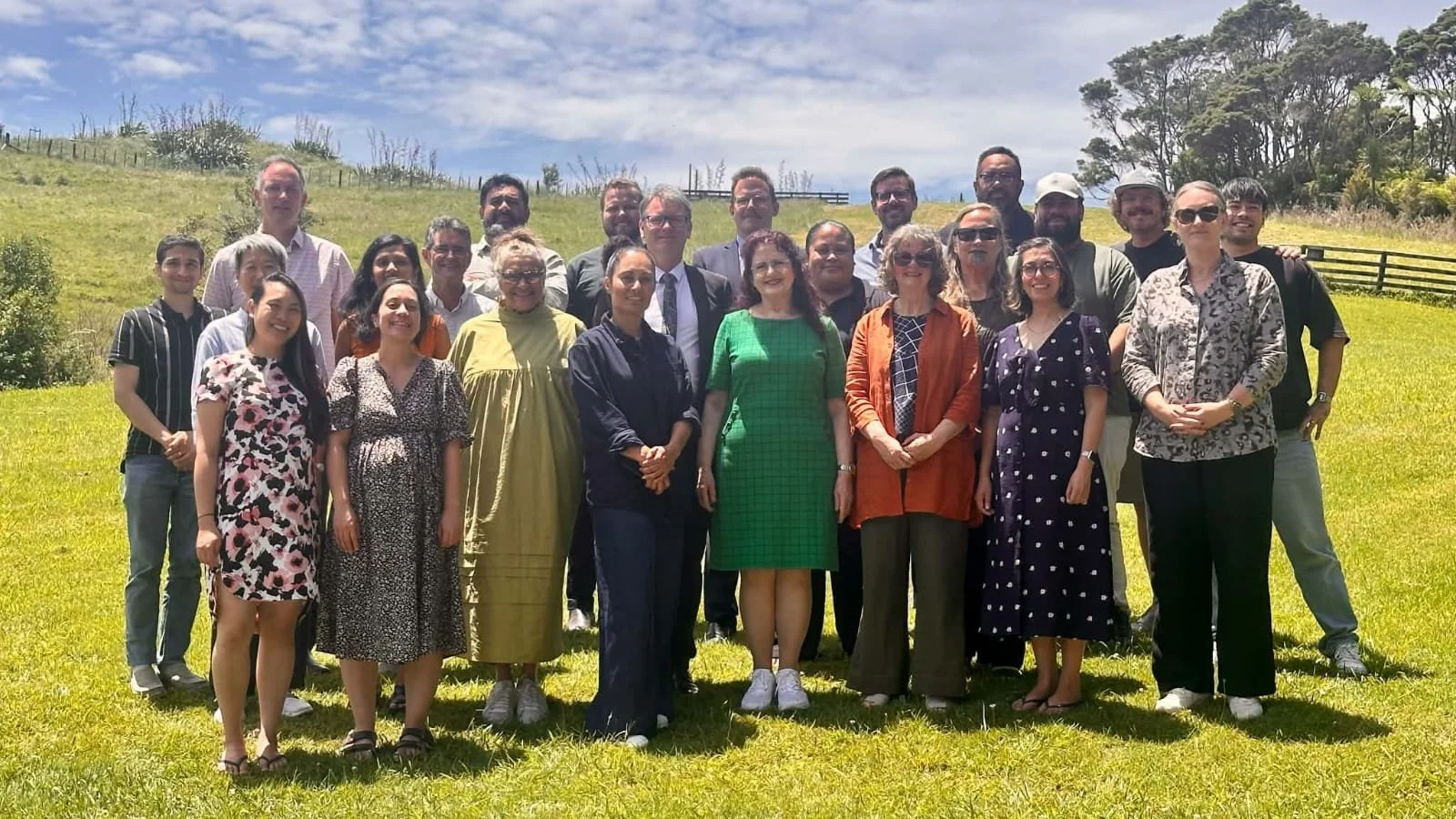
Over three uplifting days in early December, members of four institutions of the Faith gathered to reflect, consult, and draw strength from each other. With the loving support of Counsellor Daniel Pierce Olam, the annual gathering for the Regional Bahá'í Councils deepened unity among the institutions, clarified perspectives on the progress of the Nine Year Plan, and renewed commitment to supporting the release of the Faith’s society-building power.
The article below is taken from the notes of one participant.
When a joyful and loving atmosphere prevails, and thoughtful consultation occurs on matters related to the Faith’s contribution towards building a new civilisation, the radiance generated in the gathering gives the participants upliftment, spiritual energy, and an enhanced unity of vision, thought and purpose. This was the case at the annual gathering in which four institutions of the Faith came together for three days of consultations – the National Spiritual Assembly, the two Regional Bahá'í Councils, and a member of the Continental Board of Counsellors, which took place on 5-7 December 2025 at the Bahá'í Centre for Learning (Te Whare Akoranga Bahá'í) on the Hyde Dunn property in Henderson Valley.
The presence of Counsellor Daniel Pierce Olam, who travelled from Adelaide, Australia, expressly for the purpose of supporting this gathering, contributed a special joyfulness, arising from his radiant presence. Counsellor Pierce’s loving humility, coupled with his gentle wisdom and experience, elevated understanding for participants, and helped to create added enthusiasm and commitment for the onerous tasks that lie before the Councils. These two regional institutions, the fruit of both an election and appointment process, commenced their new term of service on the Day of the Covenant, just over a week before the gathering. One of their first tasks is to elect their officers for the coming term. As such, we take this opportunity to announce the newly elected officers for both Councils, as follows:
South Island (Te Waipounamu) Bahá'í Council: Chair – Mr Samuel Whitley; Secretary – Mrs Tala Asaua-Pesa; Treasurer – Mr Ezra Hopkins.
North Island (Te Ika-a-Maui) Bahá'í Council: Chair – Mr Aashish Indorewala; Secretary – Mrs Robyn O’Connor; Treasurer – Mrs Nina Tu’i; Vice-Chair – Mrs Roya Ebrahimi
Music featured prominently over the three days and enhanced the sense of connection and joy. Counsellor Pierce offered very helpful comments at various points during the programme, and one participant’s understanding of some of what he said is offered below, because it may be of general interest, bearing in mind that these comments were aimed at the Councils, are abbreviated, and are not all specifically addressed to individuals or communities.
This is a time to come together to look at the learning about how our clusters move. This is part of learning about large-scale growth. In the last series of Plans, we learned how to do this, but it didn’t mean it was applied everywhere. As a worldwide community we learned how to move populations, but in this series of Plans we need to release the society-building power of the Faith in those populations, leading to significant transformation in our populations. We are coming together to see what the lay of the land is in Aotearoa: what does it look like in each region? How far have things changed since last year? What are the main shifts in one year? And putting this in context, i.e. is the amount of change commensurate with the longer process of the Nine Year Plan? We need to put the developments of the last year in the context of the goals of the Nine Year Plan to see if we are on track to meet the goals of the Plan.
Australia and New Zealand will have a joint institutional meeting in April, which will help us take stock of the past four years so that we are in a position to see what we need to do in the remaining five years of the Plan. The spirit in which we serve is critical. These three days together is not just to see where we are and view the landscape but also to replenish and renew bonds of love and unity between us. How can we connect more deeply and learn more about each other, our families, our aspirations, and perhaps even some of our disappointments and setbacks - and assist one another to step back from those disappointments and setbacks.
Reminding ourselves of the ancestors who have walked this path and calling on them to assist our service is a way that our rich spiritual heritage can be drawn on. He referred to members of institutions learning how to keep connected to their neighbourhoods, while giving service to what they are called to do on institutions. How to be deeply part of one’s cluster and still have the view of the whole region! How to keep operating at the grassroots as an individual while serving on the Council, was an area explored briefly at the gathering.
A few thoughts were shared about growth. The process of growth is simple, so let’s not complicate it as growth occurs. We need clear thinking about a 20-year path – and thinking through the lens of organic growth, keeping the simplicity as growth happens in the way of a tree – if a tree loses its organic nature it will die. Whatever stage of growth the tree is at, the leaves are the same and maintain their service to the tree. A big branch needs an adequate sized trunk. Every element in an organic process is important.
· The Councils are institutions whose role is to carry out the Will of God. The Hands of the Cause, who always moved the hearts of the friends, were faithfully carrying the spirit and instructions of the beloved Guardian and the House of Justice. Similarly, he said, the Councils’ divine mission is to carry the spirit to move the friends. He went on to mention that the power of accomplishment lies with the friends, so inspiring and guiding the friends to arise and mobilising them, will release the power to accomplish progress.
“The time has come for the friends … to think not as to how they should serve the Cause, but how the Cause should be served.” — Shoghi Effendi, quoted in The Priceless Pearl
· Everything begins with some tutors who bring in others to form an expanding nucleus that eventually develops the full range of activities, and the relationships amongst them develop, such that as the nucleus grows, some of the individuals may focus on specific activities.
· If the organic nature is lost and things become mechanical, it will not thrive. The structures for accompaniment, the systems for flows of information, and the property needs all have to keep up with the growth.
· The different systems need to be integrated together, but as we add new elements, we don’t lose the earlier ones. For example, in communication systems all the various forms of communication have been retained while new ones are added.
· Systems and structures are a means to an end, not an end in themselves. This concept needs to be embedded in everything being done.
· There are many aspects to the movement of a cluster from one stage of development to the next, and if these aspects are not put into context, it can result in fragmentation of efforts.
· We need to walk in this world with the sense that we are being supported by the spiritual world. The Revelation of Bahá'u'lláh has created an impulse in the world that is continuing, through the power of the Covenant.
· The execution of the Divine Plan means we need to see where we are going. The work of Councils is to collaborate with and be guided by the National Spiritual Assembly; work with their closest collaborators who are the Auxiliary Board members; work with the training institute – which sits under the Council but has autonomy – overseeing but not directing the institute; Area Teaching Committees (ATCs) are powerful agencies to mobilise the power of the individuals – they are the main instruments of a Council. The Council has to support the ATCs to have a close collaboration with the training institute and be supportive of the Local Assemblies. Local Spiritual Assemblies in the Nine Year Plan are moving to a much higher role. It can be complicated for the Councils to work with all of these parties, but needs to be kept simple. The Council has the integrating role – harmonises all the different efforts – and is the agency that reminds everyone where they are going: to the vision of large-scale growth and moving populations. Whatever is being done, we are connected to learning, and to deploying resources to the best effect (whether they are material resources or human resources).
· The institute works well if a population takes ownership of it. This is where things can get complex but still needs to be straightforward. The institute takes a different form in different populations, but the pedagogical principles are the same. The teaching-learning process (pedagogy) guides the way forms can take on different expressions in different cultural contexts.
· The material means that we need for this work, and where these material means come from, and for the Council to think more deeply about the flow of material resources – these are some of the main considerations the Council carries, to draw on what is coming from the grassroots and to be wise stewards of the funds coming from the national level.
· Connecting souls to the Revelation by drawing on the instrument of limitless potentiality (the training institute) is key, so strengthening the training institute is at the heart of growth.
“…need to cultivate an atmosphere that encourages the friends to be methodical but not rigid, creative but not haphazard, decisive but not hasty, careful but not controlling, recognizing that, in the final analysis, it is not technique but unity of thought, consistent action, and dedication to learning which will bring about progress.”
This extract from the 28 December 2010 message of the Universal House of Justice to the Conference of the Continental Boards of Counsellors was referenced during the meeting.
Pioneering
Two of the Aotearoa Pioneering Taskforce members joined the gathering for one session. Counsellor Pierce commented that conversations about the concept of pioneering must be constantly kept in the minds of friends. Each Council needs to make sure this is part of the conversation in their regions. Socialising of this concept amongst junior youth, who are looking for heroes, role models, and stories they can connect to, is important. The Junior Youth Spiritual Empowerment Programme (JYSEP) uses stories, but can we amplify this with stories of the heroes of the Faith from the Heroic Age of the Faith, and bring this to life with the junior youth?
When young people reach the end of high school, it is a year of opportunity in one’s life, and how do we systematise deployments for short term pioneering? In many countries if a young person tastes the sense of responsibility of pioneering at that stage of their life, they may arise with their own future family to pioneer when they are older. Another element to consider might be how we capitalise on the natural movement of people who are moving for other reasons, to see themselves as pioneers, with some extra preparation? He also feels the seniors in the community have so much capacity and potential. They have something priceless, as the stories of many friends who arose in the Ten Year Crusade attest to, since so many of those pioneers were older believers. Aotearoa has responsibilities far beyond our country for pioneering, and we know if we give generously, the bounties flow black. The gathering enjoyed having members of the Pioneering Taskforce present for this consultation.
The closing comments from Counsellor Daniel Pierce included the following.
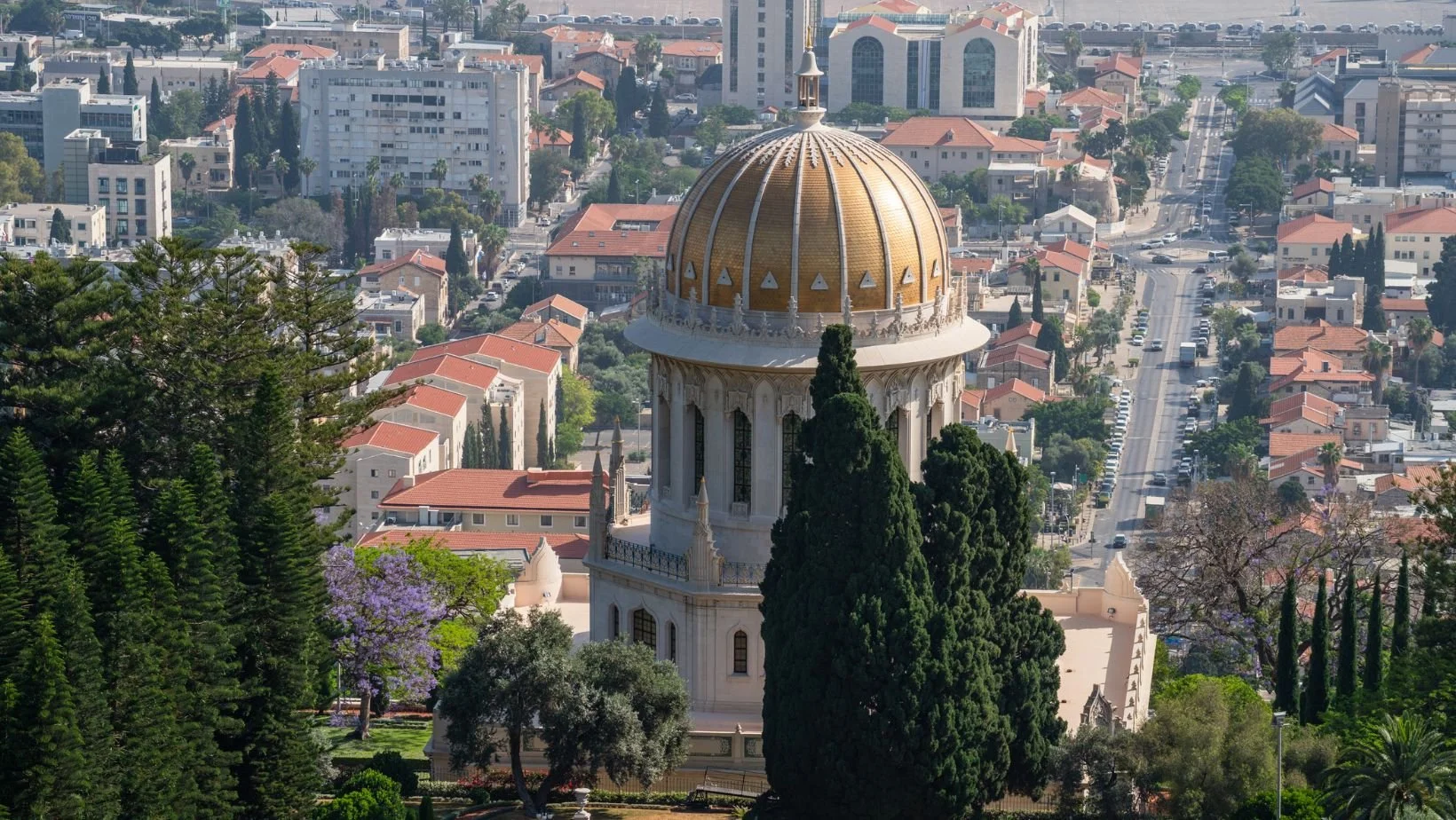
He expressed gratitude for this gathering. He feels it was a gift to be in this space and feel the strength that Aotearoa community has, and the force of the Revelation flowing. He is grateful to feel a sense of replenishment and has drawn on the strength of all present. He loved having reflections with the National Spiritual Assembly over icecream at one point. In terms of the work in front of them, the Counsellors will go for their gathering in Haifa later this month, and the beloved Universal House of Justice will give them a fresh set of instructions and guidance for the remaining five years of the Nine Year Plan.
He hopes the friends will have a growing sense of anticipation around a possible letter arriving from the World Centre at the end of this month, which will be addressed to this conference of the Counsellors but will also speak to the Bahá'í world. When the House of Justice speaks to the Counsellors, they are also speaking to every institution and individual to respond to this message in their thoughts and actions.
Counsellor Pierce had earlier in the day mentioned that in walking up the hill (accompanied by the resident cattle) to the potential site of the future national Mashriqu’l-Adkhár and thinking about this blessed land, what our predecessors have done here since it was acquired in 1949, and what will take place here in future, he connected this place to where he was two weeks ago, at the House of Worship in Papua New Guinea and said a House of Worship symbolises the connection between worship and service, a concept that brings into being a global civilisation.
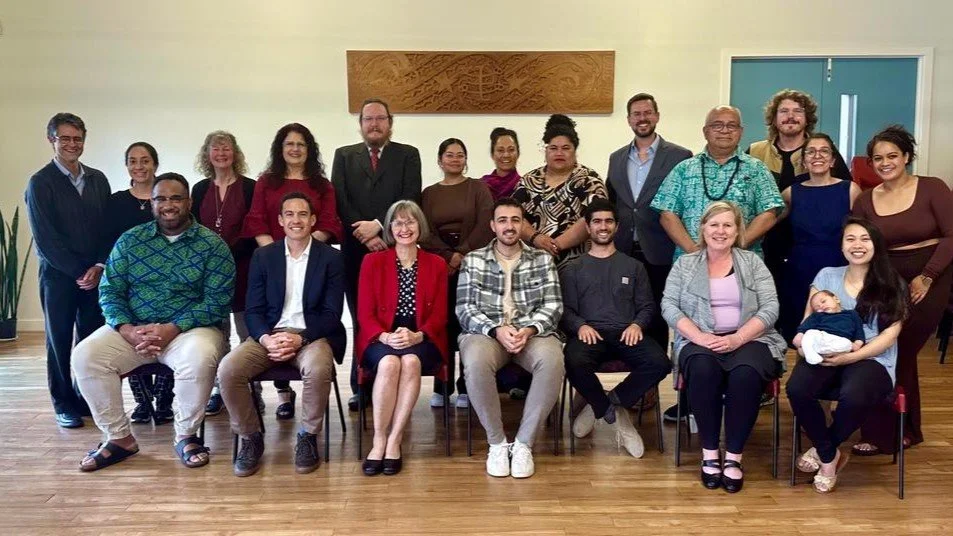
Feature photo: Participants in the annual gathering for Regional Councils with Counsellor Daniel Pierce Olam from Adelaide pictured at the back, on the left side of the photo.