One family's story of 'reading their reality'
In recent messages, the Universal House of Justice has highlighted how the flourishing of family life contributes to the strength of our communities, and how groups of families can extend the reach of community-building activities. It has also reminded us that advancing the Plan requires that families and individuals continually learn to read their own reality, see their own possibilities, and make use of their own resources.
In the story that follows, Martha, who now lives in Auckland, reflects on her family’s journey of service, sharing a moving experience from their time in Guam prior to settling in New Zealand.
Martha's story:
A personal story learning to serve as a family with other families
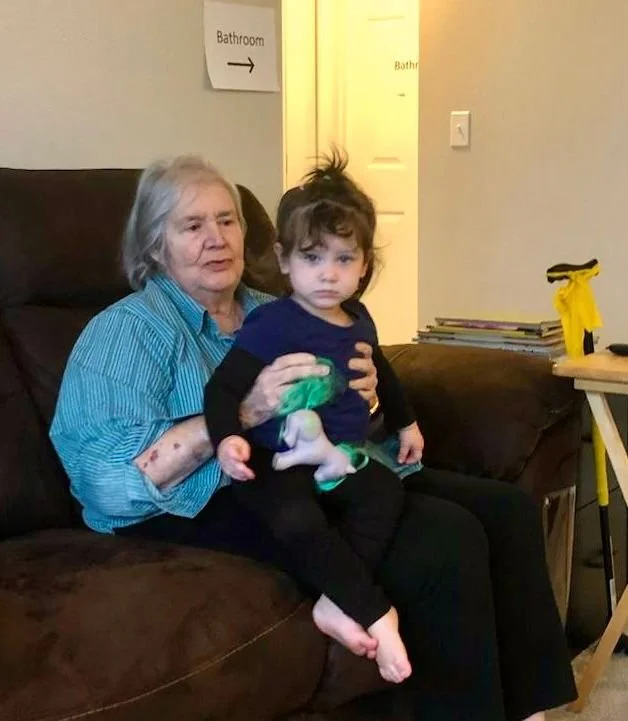
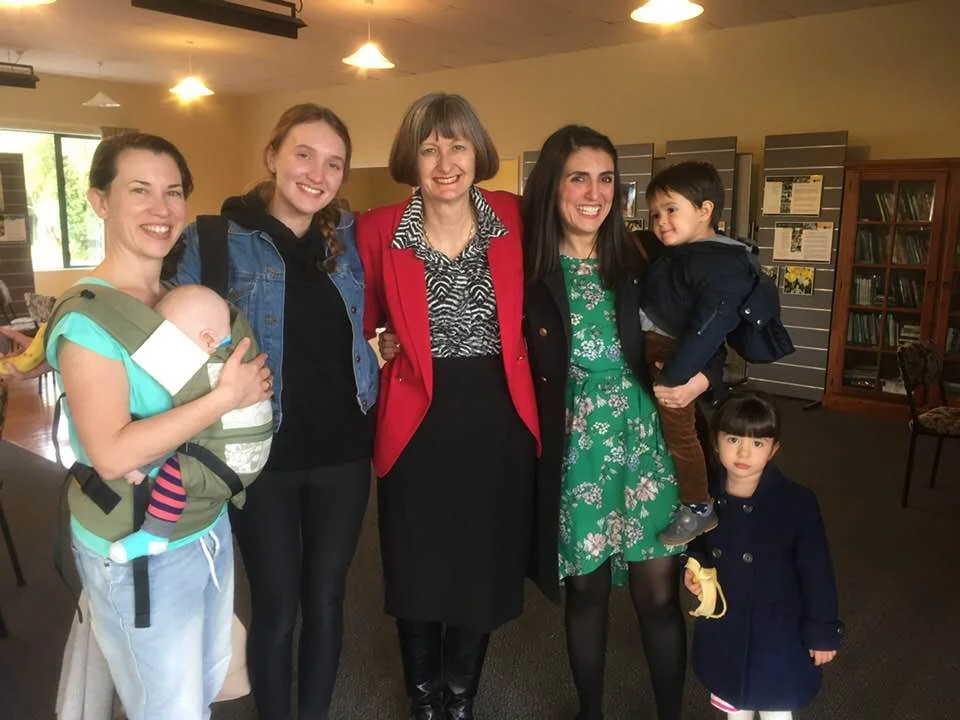
Martha’s mother-in-law, Barbara, with her grand-daughter.
“Reading reality” is a phrase that is often heard in spaces of consultation - a phrase so often stated and said that sometimes it can lose a little bit of meaning. What reality are we reading and who are we reading it with? And more importantly when we think of reality what is it in relation to?
This question first came to my heart and mind when, the week our first child was born, my husband and I became full-time caregivers to his dear mother who was diagnosed with sudden onset dementia.
Before I became a mother, I had always imagined that motherhood would not stop me from serving the Cause I loved so much. Pre-motherhood I’d imagined coherence to mean that I’d simply wrap my baby behind my back and continue as normal with the same pace and energy. We can all let out a knowing laugh together. That imagined idea, it turned out, was not reality for me and my husband – especially now faced with the pressing need of a parent starting the unpredictable journey towards their end of life on this earthly plane.
Suddenly unable to keep up with the pace of service we had enjoyed just a couple of weeks prior to becoming parents, we felt overwhelmed, a little heartbroken and stressed. What was this new reality we found ourselves in and how do we serve on top of the new demands of family life? How do we think about this new reality? A few extracts of guidance clarified our thinking as we reflected together:
Regarding the care of our parents:
Follow ye the path of Truth, which indeed is a straight path. Should anyone give you a choice between the opportunity to render a service to Me and a service to them, choose ye to serve them, and let such service be a path leading you to Me. This is My exhortation and command unto thee. Observe therefore that which thy Lord, the Mighty, the Gracious, hath prescribed unto thee.
—Bahá’u’lláh
On reading one’s reality:
What is more, everywhere, a notable number of friends find themselves ready to enter into conversation with people of varied backgrounds and interests and to undertake with them an exploration of reality that gives rise to a shared understanding of the exigencies of this period in human history and the means for addressing them.
(28 December 2010 – To the Conference of the Continental Boards of Counsellors)
While the friends in a cluster might well benefit from the experience of those who have already established the necessary pattern of action, it is only through continued action, reflection and consultation on their part that they will learn to read their own reality, see their own possibilities, make use of their own resources, and respond to the exigencies of large-scale expansion and consolidation to come.
(28 December 2010 – To the Conference of the Continental Boards of Counsellors)
After meditating on the Writings and guidance from the Universal House of Justice, two things became clearer to us. One, rendering service to our parents is an exhortation and command by the Blessed Beauty Himself, and two, we read our reality to see our own possibilities, rather than just our limitations, and then make use of resources available to us in order to respond to the needs of society.
When we started to read our reality in light of what new possibilities for service were now open to us, on a superficial level one can easily think our service was justifiably limited to just caring for an aging parent and our newborn. Yet for us this did not sit well. So we started to ask questions that helped us think outside of ourselves a little.
Who else in our community is also struggling with caring for a loved one full-time? How do we care for both the physical and spiritual well-being of loved ones with dementia? And lastly we had to come to terms with the fact that we could not do parenting and caregiving by ourselves – we needed help! We desperately needed prayers!
That’s when the idea of a devotional gathering for caregivers of loved ones with dementia was born. We realised there were others in our own community who struggled to serve while caregiving for a loved one and felt the constant pain of turning things down. Others still, felt isolated due to the demands of full-time caregiving.
With another friend, we started a weekly devotional gathering for caregivers and loved ones with dementia or other disabilities. It was a beautiful space that nourished everyone, especially the dear ones with dementia. It was a safe space where it was okay if a friend started to tell a story in the middle of a prayer, or if the "wrong" prayer was said or part of a prayer was combined with another one. We maintained the dignity of our friends above all. After the prayers we would share stories of our caregiving adventures, share resources and best practices. We laughed and cried together and encouraged each other onwards. My mother-in-law, a long-time secretary of the National Spiritual Assembly of the Mariana Islands always took notes, or at least tried to, during the gatherings! Another dear friend struggling with severe Alzheimer's disease would always address us as "distinguished members of the court" before he recited his favourite prayer.
All these friends in the devotional gathering have now passed on to the next world. But they taught us some valuable lessons and contributed to our community life until they passed away. We learned that the framework for learning and the core activities - especially devotional gatherings - gave us a pathway to creatively serve our friends at the end of their life and at the same time give them a channel to contribute meaningfully as well. In society it's too easy to put away and forget those who cannot work or serve in the way they did in their heyday. But this concept of accompaniment helped us view our caregiving in that light - we accompanied these friends to stay within the orbit of community life.
For us, reading reality, both within our family and outside it, helped us see what we couldn’t before - the exigencies and needs of an often-ignored part of the community, and how to, in simple yet profound ways, apply - in action - the Revelation of Bahá’u’lláh.
Shortly after our devotional gathering experience the Psychology Department of a local University invited us to share our experience of the devotional space for caregivers. There was high interest in how we were thinking about both the material, physical and spiritual well-being of both caregivers and their loved ones. What we shared was really a small humble experience yet proved to be valuable for students thinking about the well-being of aging populations.
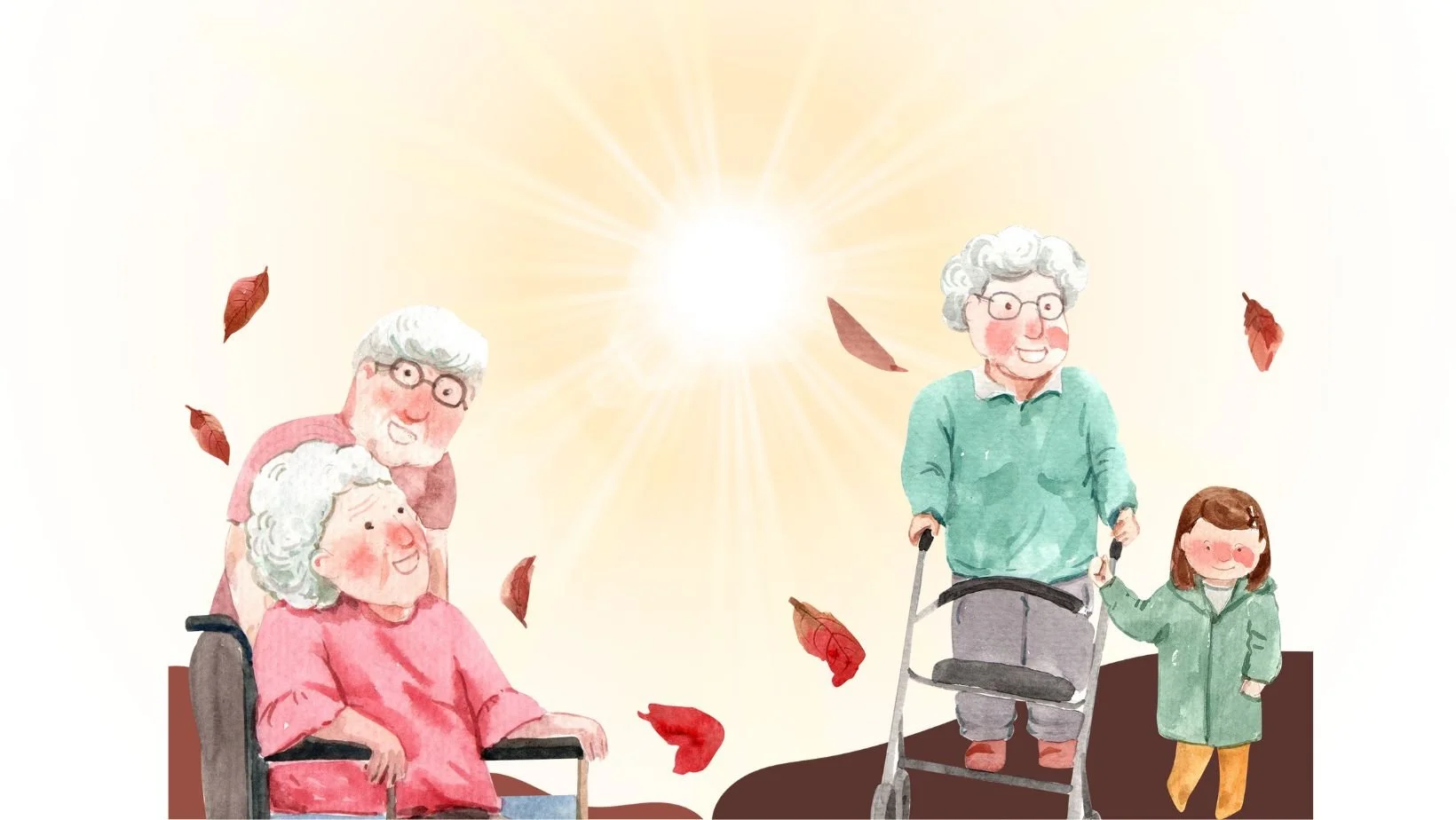
Feature image - created in Canva.