Social Action Expressions Part 5
The following case studies highlight how grassroots initiatives can gradually evolve into sustained patterns of service that strengthen both individuals and communities. Emerging from relationships built through the institute process and community-building activities, these efforts in Paraparaumu and Palmerston North demonstrate how spiritual principles can find expression through education, the arts, friendship, and collective service, and how these reflect a growing capacity to translate spiritual insight into action for the betterment of society.
The Sewing Clinic, Paraparaumu
The Sewing Clinic is an initiative sustained over 8 years
The focus is on advancement of women, and economic participation
Eight years ago in Paraparaumu, a small children’s class became the seedbed for a wider community initiative that wove together livelihood, learning, and friendship. When Penina was seeking a new direction in her own work life, she saw an opportunity to create something that could also support other mothers in similar circumstances—women who needed flexible, part-time, or casual employment while caring for their families. What began as a simple sewing business soon evolved into the Sewing Clinic: a space for shared work, building skills, and mutual support.
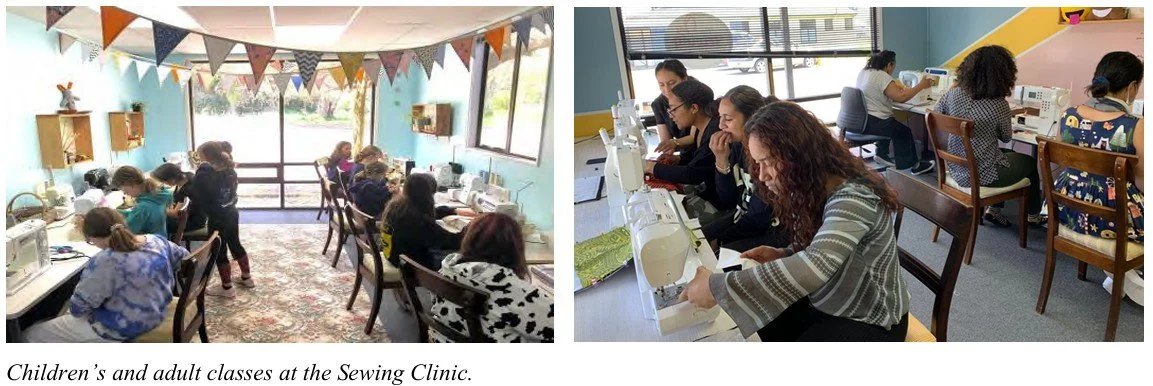
Over the years, five women became part of the Sewing Clinic, most of them connected through the children’s class or junior youth group their children attended. The early focus was on sewing and selling handmade goods, but as confidence and capacity grew, the initiative shifted toward teaching sewing skills to others in the community. At its height—just before Covid—the Sewing Clinic was running up to ten classes each week, serving 40–50 learners of different ages and abilities. These included adults learning basic skills and children who stayed in the programme for several years, forming bonds of friendship and cooperation.
As the work expanded, the group moved from a local hall to a rented space in the Lindale complex, with class income covering most expenses. The clinic became more than a business—it was a place of community connection. Alongside sewing classes, the space hosted children’s classes, junior youth gatherings, and family events. The team also collaborated with the local council, receiving small grants to run community workshops on waste reduction, clothing repair, Pasifika tapa-making, and dance—projects that built local relationships and celebrated cultural diversity.
Throughout its evolution, the Sewing Clinic embodied the principle of coherence between one’s work, service, and spiritual life. It provided a means of livelihood for mothers while fostering practical skills and community spirit. Two of the women later gained full-time employment using the references and experience gained through the clinic. When the last mother secured full-time work in early 2025, Penina recognised that the original purpose had been fulfilled, and the group decided to bring the project to a close.
Reflecting on the experience, she observed that what gave the Sewing Clinic its life was not simply the activity of sewing, but the relationships of trust and collaboration among mothers who were learning to “do life together.” Even as the clinic is winding down, a new line of social action is emerging—a writing club for mothers pursuing postgraduate studies—showing how one initiative can naturally give rise to the next, each shaped by the evolving needs of the community involved.
Highbury JYSEP Youth Group – an unincorporated society
This is a series of projects of fixed duration since 2015
The focus is on empowerment of youth and the betterment of their community through education, the arts, and service projects
In 2015, a core team of youth in Palmerston North formed an unincorporated society known as the Highbury JYSEP Youth Group. The initiative emerged from the growing spirit of service among young people engaged in the community-building activities of the Institute process. Seeing themselves as a team dedicated to the empowerment of youth and the betterment of their community, they began a sustained effort to release the creative and moral potential of those around them through education, the arts, and service projects. Registering as an unincorporated society helped the team work more closely with other organisations and strengthened their capacity to handle funding and shared projects responsibly.
Over the years, evolving core teams have continued to accompany new generations of youth, mothers, and families. This work is animated by guiding principles drawn from the Institute process—belief in the nobility and potential of every human being, the understanding that service to others is the true purpose of life, and a commitment to unity in diversity, equality of women and men, and coherence between material and spiritual progress. Growth is approached as a process of collective learning, strengthened through consultation, accompaniment, and systematic reflection. Through this process, participants develop the ability to read social reality, think and act coherently, and translate spiritual insights into practical action for the common good.
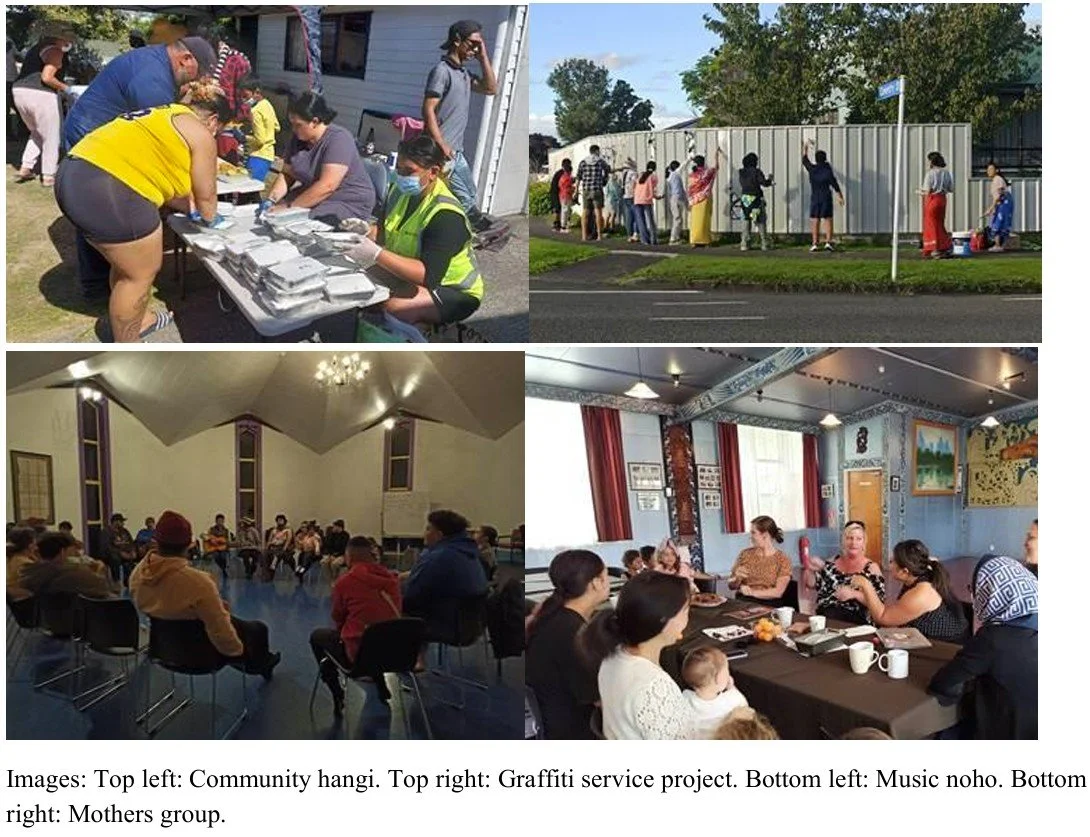
The Highbury JYSEP Youth Group has carried out a wide range of projects over the past decade. These include music noho and arts nights that help participants express themselves artistically while cultivating a culture of purposeful, uplifting creativity; cultural arts, crafts, dance, and workshop programmes, homework and study sessions that support young people’s academic progress; and cultural initiatives—including local hāngi and cultural cooking projects—where families and youth build capacity to make traditional food. Sports nights and whānau days and noho further strengthen bonds of friendship, and offer spaces for families to grow together in spirit and service.
Community beautification and environmental projects have also formed a significant part of the group’s service. These include painting the local library in collaboration with schools and kindergartens, painting over graffiti, planting trees in public spaces and home gardens to enhance nutrition and biodiversity, and organising environmental cleanups along rivers and in local parks.
Other ongoing initiatives include community discourse gatherings for youth and key community members on themes such as the nature of youth, service, and education; and programmes for mothers, including study sessions on motherhood and weekly study of junior youth texts at the local library. Members of the group have also taught creative moral education programmes at the local school under the titles Mana Tangata, Ngā Toi Māori, and ‘Flowers of One Garden: Beauty of Diversity’ project, and coordinated a multicultural playgroup ‘Little Flowers of One Garden’, at the Multicultural Centre to foster friendship and learning among diverse families.
In addition, youth have engaged in service-oriented fundraising, cooking, and crafting to raise funds for bereaved families and for the continuation of their community activities. Through these diverse efforts, hundreds of individuals have benefitted from the activities. A number of these projects focused on helping individuals discover and apply their talents to meet the needs of their community and to build livelihoods grounded in service.
Among the capabilities developed through this ongoing process are the capacity to study spiritual principles systematically, consult and make collective decisions, accompany others in their paths of service, and organise action in a coherent and sustained manner. Participants also learn to identify and use their talents to serve others and to earn a living, discovering coherence between livelihood and contribution to society. The group has cultivated an individual and collective devotional character—nurturing hearts through prayer, reflection, and the remembrance of God—and built a culture of study, consultation, and action that links worship with service. Participants develop the ability to work in diverse groups, to foster unity across cultures and generations, and to invite new friends to join in community-building efforts. They build confidence in relying on divine confirmation, create environments of mutual support, and nurture perseverance, joy, and faith in collective progress.
The group’s activities have been sustained across homes, community centres, and marae throughout Palmerston North, supported by partnerships with organisations such as the Multicultural Council, Environment Network Manawatū, Te Waka Huia (a Māori health organisation), local librarians, and kaumatua. Funding has been received over the years from Te Waka Huia, the Lotteries Community Grant, the Z Challenge Community Funding, and the Creative Communities Fund.