A letter from a parent to his parenting children
In the context of the upcoming Summer School theme “Homes as Havens: Pillars to sustain humanity”, and mindful of the 19 March 2025 letter from the Universal House of Justice that calls on the friends to study deeply and take its contents to heart, Bahá’í Aotearoa is sharing the following personal letter from a parent to his adult children who are themselves parents.
These reflections are offered as one individual’s perspective, grounded in personal experience and study of the Writings. The views expressed are not authoritative but may provide practical food for thought in our shared efforts to raise children and families who can stand firm amidst the challenges of today’s world.
Dear family, Alláh’u’Abhá!
These times are, perhaps, the times of the “mental tests” mentioned by the Master. These tests, we know, will come to us all, and perhaps most especially to the children as they grow and move out into the wider society. It is for them that I share these thoughts with you.
We are given this alert:
“…when all humanity is in the throes of dire suffering, the Bahá’ís should not hope to remain unaffected. Should we consider the beam that is in our own eye, we would immediately find that these sufferings are also meant for ourselves, who claimed to have attained.”
(From a letter written on behalf of Shoghi Effendi to an individual believer in reply to a letter dated October 14, 1931: Bahá’í News, No. 58, January 1932, p. 1)
The Bahá’í Writings are replete with guidance about how precious our children are and how we must love and cherish them. This we acknowledge. In our love and cherishing we would, literally, give our physical lives for them.
There is another aspect to this great love. It is the love that gives us strength and patience, tolerance and forbearance as we guide our children, moment by moment, hour by hour, through long nights and days as we cherish them in their formative years. Moreover, this love demands that we take responsibility for the training of our children so that they might live the life of Bahá’ís even in the “tremendous darkness in the world today, …..caused by mankind’s ……giving way to the animal side of human nature.”
(Shoghi Effendi, Lights of Guidance, p. 113)
So how do we do this?
Our Writings are rich in guidance. In reflecting upon their application, we must keep in mind:
“The child when born is far from being perfect. It is not only helpless, but actually is imperfect, and even is naturally inclined towards evil. He should be trained, his natural inclinations harmonized, adjusted and controlled, and if necessary suppressed or regulated, so as to insure his healthy physical and moral development.”
(On behalf of Shoghi Effendi, July 9, 1939)
So, bearing that alert in mind, here are a few quotes and thoughts for your consideration. These quotes are but a very small part of the whole and are subject to many different interpretations. My views, expressed here, are limited and I make no claims, other than my experience and research, for the validity of them. If they, in any way, assist you in your precious role of bringing up our children my aim is achieved—if not, disregard them.
First let me say that I have carried over the application of some of these quotes (as we are guided to do in Ruhi Book 1) to include their relevance to situations not specifically mentioned. For example, Bahá’u’lláh repeatedly and forcibly tells us that “fear of God” is the great protector of mankind, it is that “…which is the fountainhead of all goodly deeds and virtues…” and “Through it the cities of men’s hearts have been opened throughout the ages and the centuries….” So, I have felt it safe to assume that our little ones need, to some degree, something to “fear” so that their hearts may be opened to guidance.
So, what tools do we have to carry out this awesome task?
Well, let’s first look at the attitude, the thought perspective, based on the Faith’s guidance, that we might adopt as we consider what practical, everyday ways we have to hand to bring up our children.
“Beware lest, through compassion, ye neglect to carry out the statutes of the religion of God…..We school you with the rod of wisdom and laws….. like unto the father who educateth his son…”
(Bahá’u’lláh)
“Bring them up to work and strive, and accustom them to hardship.”
(‘Abdu’l-Bahá)
The Universal House of Justice embraced this Bahá’í principle by stating:
“Love demands discipline, the courage to accustom children to hardship, not to indulge their whims….”
(Universal House of Justice, Letter to the Bahá’í World, April 2000)
And regarding discipline:
“….there is a Tablet of the Master which considers beating as not permissible, this does not necessarily include every form of corporal punishment. In order to have a full grasp of the Master’s attitude towards punishment, one has to study all His Tablets in this respect. For the time being no hard and fast rule can be laid down, and parents must use their own wise discretion in these matters until the time is ripe for the principles of Bahá’í education of children to be more clearly elucidated and applied.”
(Universal House of Justice, August 12, 1975)
So, dear family, I share these quotes and notes not to offer any definitive answers to the challenges we face bringing up our children, nor to offer specific guidance, but rather to perhaps promote consideration, as individuals, as families and as communities, as to the best way to apply the guidance for the safety and well being of our children.
Day-to-Day Reflections
How can we “accustom them to hardship” to “work and strive”?
Do we have “the courage to accustom children to hardship, not to indulge their whims….”?
Some thoughts about tasks:
Do we give them tasks about the house/garden that require real effort, and require them to carry out these tasks without constant reminders?
Do we make it clear that these are their duties—they are not doing anyone any “favours”?
Do we avoid over-praising them when they carry out these tasks?
Do we demand certain standards of work and challenge and sanction them if they fall short?
Do we, for example, insist that each night they prepare their clothing/uniform for the next day’s activities?
These ways, among others, can help to develop in our children a sense of duty, responsibility, and teamwork, and to help them not take their comforts for granted.
Thoughts about character building:
Do we show our children that peers, siblings, cousins cannot all be treated the same, nor can they always receive the same gifts or attention—and that if they feel disappointed or left out, they must deal with it without needing to be cosseted?
Do we require them to accept, with stoicism, changes in promised plans due to changed circumstances, without needing to “compensate” them in some way for their disappointment?
Do we make it clear that, on occasion, the family’s needs/preferences override their personal desires, and should they not accept that, and disrupt the family unity, they may be left out of whatever has been organised or be sanctioned?
Do they understand that, under whatever circumstances a family decision has been finally reached, they should accept and support that decision?
These ways, among many others, may help our children to develop the strength of character to deal with the pressures of the wider world—pressures that will, as we are told in the above quote, surely come to them. It will also help them to avoid developing that invidious turn of mind—a sense of entitlement.
The challenge is this: if a child has a strong sense of entitlement and then their expectations are not met, their disappointment can lead to a feeling of resentment. This resentment can, in turn, lead to bitterness, which can then lead to that sad condition of self-pity, unhappiness, and a sullen dissatisfaction with life—a condition we can witness in over-indulged children, and a condition that is surely the antithesis of all that our Beloved wishes for our children.
So, great indeed is the responsibility we carry as we raise our Bahá’í children, but great also is the bounty if we make the effort:
“He that bringeth up his son or the son of another, it is as though he hath brought up a son of Mine; upon him rest My Glory, My loving Kindness, My Mercy, that have compassed the world.”
(Bahá’u’lláh, Synopsis and Codification of the Kitáb-i-Aqdas, p. 16)
“Among the greatest of all services that can possibly be rendered by man to Almighty God is the education and training of children, young plants of the Abhá Paradise.....”
(Selections from the Writings of ‘Abdu’l-Bahá, pp. 133-134)
And what bounty greater than to fulfil this service to God, this service to society, this service to our community and this service to our children, if we can guide them to attain to the state so beautifully described by ‘Abdu’l-Bahá:
“Training in morals and good conduct is far more important than book learning...... The reason for this is that the child who conducts himself well, even though he be ignorant, is of benefit to others, while an ill-natured, ill-behaved child is corrupted and harmful to others, even though he be learned. If, however, the child be trained to be both learned and good, the result is light upon light.”
(Selections from the Writings of ‘Abdu’l-Bahá, pp. 135-136)
Closing Note
Some elements of the original letter have been redacted. Occasionally, Bahá’í Aotearoa may choose to publish “opinion pieces” such as the above. The views expressed here are those of the individual writer and do not constitute authoritative guidance.
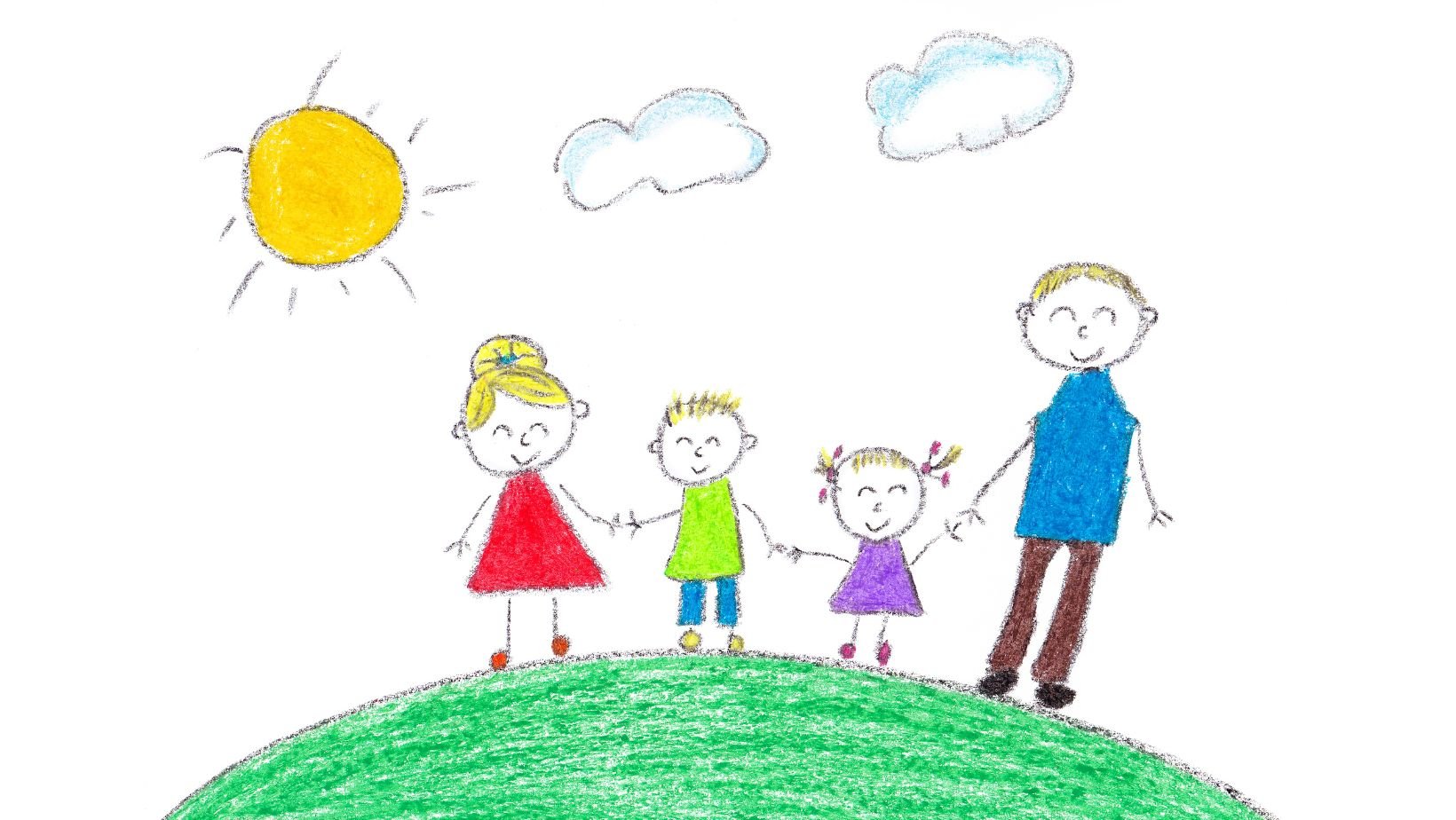
Feature image: Created in Canva Images